Case Details
Kenya 300 TPD Gold Processing Plant InstallationProject Timeline: Started May 2026;
Capacity: 300 tons per day (12 tons per hour)
Raw Material: Rock gold
Feed Size: > 210 mm
Average Grade: 2.5 grams per ton
Recovery Rate: Over 92%
Annual Profit (est.): Approximately USD 25,000,000
Key Supplier/EPC: Shandong Metro Machinery Co.,Ltd
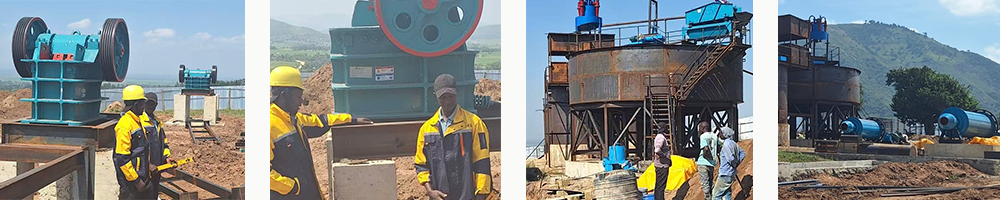 Process Flow Overview
- The CIP process for this 300 TPD plant follows a standard and efficient flow to extract gold.
- Crushing: The raw ore is crushed from a large size (e.g., 210mm) down to smaller pieces (less than 5mm) using a combination of jaw crushers, cone crushers, and vibrating screens.
- Grinding: The crushed ore is fed into a ball mill, which, in conjunction with a hydrocyclone, grinds it into a fine powder. The target size is typically that 90-95% of the material passes a 200-mesh screen (about 0.074mm) to liberate the gold particles.
- Leaching & Adsorption: The fine ore slurry is mixed with a cyanide solution in a series of leaching tanks to dissolve the gold. The slurry then moves to adsorption tanks where activated carbon is added to adsorb the dissolved gold from the pulp.
- Desorption, Electrolysis & Smelting: The gold-loaded carbon is processed through a desorption and electrolysis system to recover the gold as a "gold mud". This mud is then dried and smelted in a furnace to produce high-purity gold bars.
Key Plant Components
- The success of the plant relies not only on the main process but also on several auxiliary systems for efficiency and safety.
- Reagent Addition Systems: Precise systems for adding sodium cyanide (for leaching), lime (to control pH), flocculants, and other chemicals.
- Carbon Regeneration: A kiln used to reactivate the carbon after desorption, allowing for its reuse in the adsorption process.
- Tailings Water Recycling: A system to treat the cyanide-containing tailings slurry, recover water for reuse, and filter the solid waste to minimize environmental impact.

